Skip to product information
1 of 1

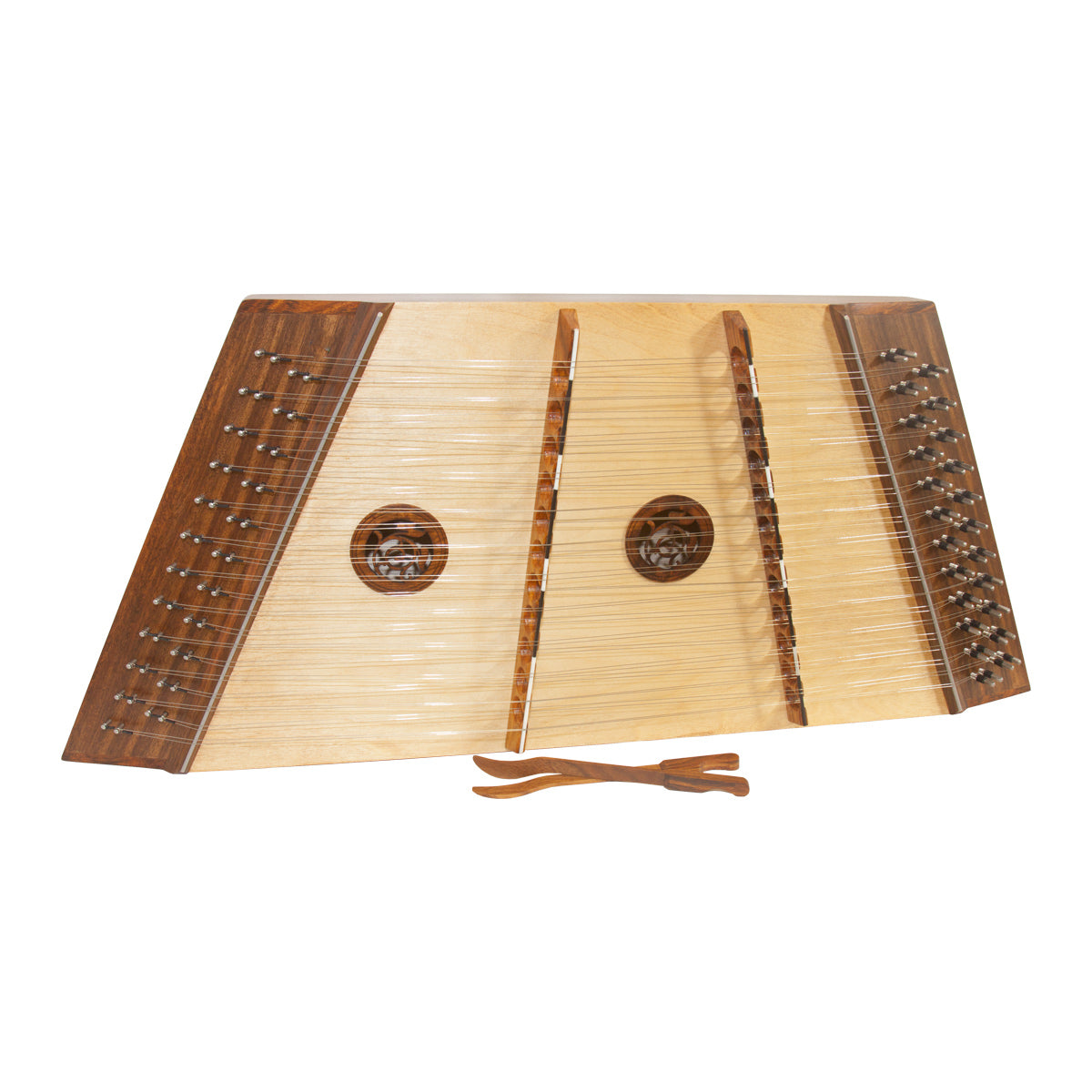
Roosebeck 12/11 Hammered Dulcimer, Rosewood Body 23 Courses

Roosebeck 12/11 Hammered Dulcimer, Rosewood Body 23 Courses

12/11 Course 23 String Courses Rosewood Body Color-Coded Bridges

Ideal for: Intermediate players and anyone ready to step up from a 10/9

A hammered dulcimer with the range to grow with you.

The 12/11 gives you 23 courses across two bridges, enough range to play in multiple keys and handle the full traditional repertoire without hitting a ceiling. The color-coded bridge saddles take the guesswork out of learning, and the included hammers, tuning tool, and extra string set mean you can sit down and start playing the same day it arrives.

Rich, Resonant Sound Across a Wide Range

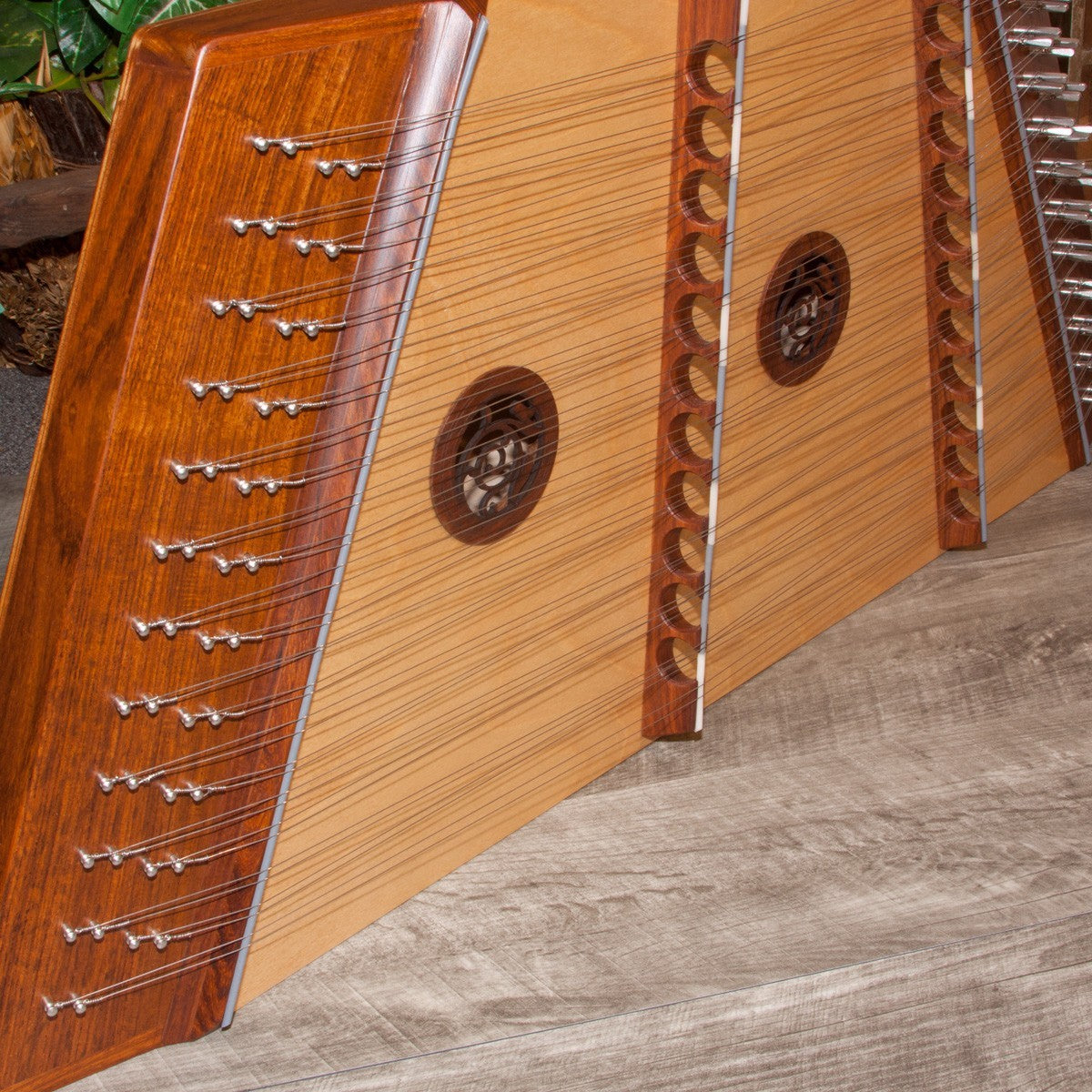
Twenty-three courses of paired strings give you a full, bell-like tone that sustains beautifully whether you are playing fast dance tunes or slow airs. The rosewood body contributes warmth and depth, while the light hardwood soundboard, set with two hand-carved rosette panels in a vine and leaf pattern, projects clearly across the room.

About the tonewoods: Rosewood is a dense hardwood that adds warmth and sustain. The light hardwood soundboard is tuned to project efficiently, so even a gentle hammer stroke carries well.

Built for Players, Not Just Display

The 12/11 layout, 12 courses crossing the treble bridge, 11 crossing the bass bridge, is the most widely used size in traditional hammered dulcimer playing. It covers enough range for the full folk and Celtic repertoire while staying compact enough to carry to a session or a festival.

The rosewood body has an opening in the back that doubles as a carrying handle. The two rosewood nuts sit along the sides, each 14.5 inches long. Forty-six metal tuning pegs thread into the body opposite 46 end pegs, keeping every string firmly anchored.

Color-coded bridge saddles: The saddles on each rosewood bridge are color-coded to help you identify string positions while you are still learning the layout. A practical detail that makes a real difference in the first weeks of playing.

Tuning and First Steps

The recommended tuning is the Traditional Fifth Interval. The owner's guide includes a complete tuning chart so you are not guessing. Use the included T-shaped tuning tool to bring each course up to pitch, string courses are spaced 1 inch apart, which makes it straightforward to work across the instrument systematically.

For reference, the distance from the left nut to the first treble bridge position at the top should be 5.9 inches (150 mm), and from the left nut to the first bass bridge position at the bottom should be 10 inches (256 mm). The owner's guide has a clear diagram if you want to double-check your bridge placement.

New to hammered dulcimer? Start with the owner's guide tuning chart before you pick up the hammers. A well-tuned instrument teaches you what each course should sound like, which makes learning by ear much faster.

Technical Specifications

Courses 23 (12 treble, 11 bass)
Strings 46 (2 per course)
Body Wood Rosewood
Soundboard Light hardwood with rosewood rosettes
Nuts 2 rosewood, 14.5 inches each
Tuning Pegs 46 metal, threaded into body
End Pegs 46 metal
Bridges Rosewood with color-coded saddles
Recommended Tuning Traditional Fifth Interval
Dimensions 34.5 inches L × 14.5 inches W × 4 inches H
Weight 14.1 lbs

What's in the Box

Everything you need to start playing arrives with the instrument.

Pair of Hammers Tuning Tool Extra String Set Owner's Guide (PDF)

Have questions about this instrument? Contact us or browse all Hammered Dulcimers.

Questions about this instrument?
View full details
Tradition you can feel, craftsmanship you can hear.
Solid tonewoods
Cured, cut, and chosen for sound.
Voiced by hand
Fretboards dressed, action set, bridges fit by our luthiers.
Made to be played
Built for working musicians, designed to sound better the more you play it.
Since 1973
Five decades of building instruments that last generations.